
An effective antidote against captious arguments, or the art of argumentative aikido
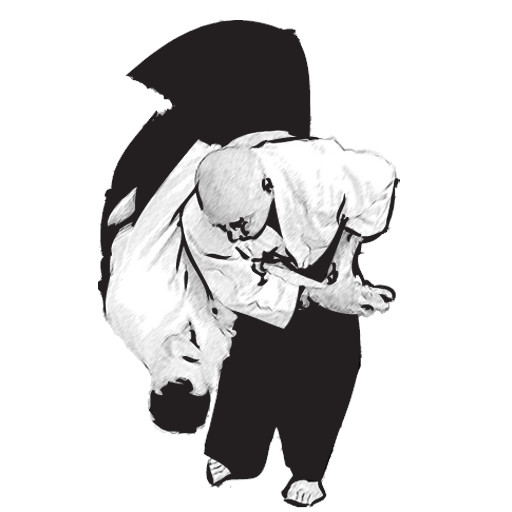
Aikido consists of techniques with weapons and bare hands using the opponent's force, or rather their aggressiveness and will to harm. These techniques aim not to defeat the opponent, but to reduce their attempt at aggression to nothing.
I've spoken of my sad tendency to follow captious arguments, either out of fear, or because the one presenting them has very strong argumentative force. Like aikido which uses the attacker's force against themselves for defense, a retorsion argument provides a good line of defense against a captious argument.
There are some philosophical statements that are or appear to be self-defeating, or even self-contradictory. For example:
A: There is no meaning or semantic content. (Postulate of materialist eliminativism)
This sentence implies that A indicates, by its own assertion, that the thought of A is without semantic content and devoid of meaning. However, to be true (or false), a statement must have semantic content or meaning. Therefore, A itself indicates that it says nothing true.
Other examples, like cognitive relativism ("There is no truth.", "There is no absolute truth.") are very difficult (in my view, impossible) to formulate in a way that doesn't make them self-contradictory. We can also cite the classic denials of the principle of sufficient reason, or of the existence of change as such propositions.
We speak of a retorsion argument in this case. These are arguments that push a statement containing one or more contradictions within itself and bring them to light.
Bad example of retorsion: the tu quoque
One error is confusing a retorsion argument with the tu quoque fallacy (also known as "appeal to hypocrisy"1). The tu quoque fallacy is committed if one rejects an argument simply because the emitter of the argument behaves in a way contrary to said argument. For example, if I tell you "running a blog to talk about philosophy and Catholicism is completely stupid", and you respond "but you run such a blog, precisely; I can therefore ignore what you tell me". This is an error of judgment: the fact that I am hypocritical doesn't mean my argument is false. Is a retorsion argument an appeal to hypocrisy?
No. Our era has complex discourse and this often distorts our understanding of judgment. Any use of emotional language isn't necessarily an appeal to emotion fallacy. Any attack against a person isn't necessarily an ad hominem. Any appeal to authority isn't necessarily fallacious. Pointing out ad absurdum by retorsion doesn't imply a slippery slope.
It's very important here to properly analyze the discourse: any reference to an adversary's inconsistency doesn't necessarily imply a tu quoque. Conversely, showing that a shaky and/or poorly explained argument leads to logical inconsistencies is a traditional method of logical criticism; and often implies what we mean by reductio ad absurdum objection. No one can deny that such an objection isn't legitimate2.
The scope of such an argument requires that the specific inconsistency to which the argument refers must remain relevant to the specific subject in question.
Let's take an example. Suppose I am a vile criminal, a repeat offender, a crook, etc. And I tell you that being a criminal is bad, undignified, harms others and causes problems for society. I am certainly hypocritical, but my attitude has no bearing on the veracity of my proposition. Indeed:
i) TiCatho is a repeat criminal.
implies no problem of logical compatibility with the proposition
ii) It is wrong to be a criminal.
likewise, is also compatible with
iii) Being a criminal is undignified, harms others and causes problems for society.
Rejecting ii) or iii) by ii) on the basis of i) is unreasonable, which is why such a maneuver constitutes a tu quoque fallacy.
Good example of retorsion
Let's take an old philosophy statement, so as not to offend anyone, the one defended by the Eleatics3:
a) Change does not exist.
Classically, engaging in such a proposition implies coherently denying that a change occurs. The problem is that the mental acceptance of the idea of reasoning from a premise to its conclusion (let's suppose that a) is a conclusion) implies a change, which immediately entails the proposition:
b) Change exists.
We clearly see here that a) and b) are not logically compatible. What we have obtained here is called performative self-contradiction, in the sense that the very act of defending proposition a) implies the falsehood of the position. This isn't just hypocrisy, it's a logical inconsistency at stake here.
Another example
Can I, therefore, indicate that it is wrong that I am a criminal, while being a criminal myself? Of course. It would be a tu quoque to reject my argumentation on the pretext that being criminal is wrong because I am a criminal.
In the case of a) and b), can change really be an illusion, if an Eleatic actually reasons from the premises of their argumentation to the conclusion? No. That's why here, it's not an error to reject the argument on the basis that to deny change, one must undergo it oneself.
One could respond here: "A-ha! This assumes that I reason from premises to conclusion, which I don't do; and I deny doing so, because that would be a changing element! You're committing a petitio principii!"
Okay. Let's suppose the Eleatic is right. Then what?
Well, first, even if we committed the petitio principii fallacy, we wouldn't fall into the tu quoque.
And second, no, Mr. houseplant, we're not committing a petitio principii. Indeed, one need only respond: "listen, you're the one who gave me this argument as refuting the existence of change. I'm just pointing out that, by repeating such an argument, we have an example of change. You yourself are engaged in its reality, despite your explicit denial. I'm pointing out a contradiction in your own position, I'm not adding an additional premise from outside. If you want to refute my critique, don't accuse me of petitio principii. You'd better reformulate your proposition so as to avoid the implicit contradiction."
But well, we can rest easy: reformulating the argument would mean our Eleatic commits the contradiction they're desperately trying to avoid. But that's their problem, not ours (=the critic's). As Aristotle said, one doesn't argue with a houseplant.
With the rotten gem, argumentative aikido clears out a lot of modern *pseudo-*philosophies4 that they want us to swallow. Always take a moment to reflect: if the rotten gem is covered with a drape that doesn't hold up, pull on it, your critical mind will thank you.
Notes
See Schopenhauer, Arthur, "The Art of Always Being Right", stratagem 16.
Unless your adversary (or you) denies the principles of logic (non-contradiction, identity, excluded middle, etc.). From that moment, dialogue becomes useless. As Aristotle indicates, "one will be more effective discussing with a houseplant".
Mainly Parmenides and Zeno, the most well-known.
Thanks Cartesians...